"Every now and then someone in the church will ask me before a sermon, 'Are you ready?' When asked, I greatly appreciate the loving care for me as a pastor and the anticipation for the preaching of God’s Word, and yet I always have to smile to myself as I think how to answer. 'Are you ready?' How do you answer that question?
From one perspective, I don’t know that I am ever fully ready to preach God’s Word. The holy weight of the task demands humility, brokenness and dependence. Preaching is a sobering task for which no one is ever fully ready, able or worthy. The pastor is merely a redeemed sinner that God graciously works through. We are but beggars, longing that God would magnify Himself through us as unworthy broken vessels. Therefore we preach, praying that God would graciously do what only he can do—cause growth (1 Cor 3:7).
In addition, no matter how much preparation one does, there is always more that can be done: more to read, more time in the text, more prayer, more time in crafting the sermon, more time on illustrations or application, etc. Readiness can imply the arrival at some point as if one is finished or has exhausted all that needs to be done. There is always more than can be done! From this standpoint, one is never fully ready. At some point in the preparation process, the pastor has to trust in the grace of God and get up and preach. We work hard in study and prayer and then trust the Lord to work.
Jul 31, 2018
Jul 27, 2018
Future Things: The Glorious 2nd Coming. Matthew 24:29-35
INTRO:
As you think about the future, what do you look
forward to the most? note Titus 2:13
I) The Horrific Tribulation
(Matthew 24:4-28)
(Matthew 24:4-28)
After the Tribulation Period (note Matthew 24:29f) comes
II) The Glorious 2nd Advent of Christ
(Matthew 24:29f)
The “Horrific
Tribulation” and the “Glorious Return of Christ” should impact our lives in a
multiplicity of ways:
Jesus’ disciples must be: 1) Well Versed Students of Scripture (and of Biblical Prophecy)
(Matthew 24:32-35)
Notice the first two commands of Christ in verses 32-33: "LEARN and RECOGNIZE!"
Tribulation showers (vv.
3-28) bring what? _____ Millennial Kingdom flowers!
What is “the pain then
glory” principle. (Rom. 8:16-18; 2 Cor.
4:16-18)
Jul 26, 2018
The Preaching Moment and Why It is So Special
"Another week means two more sermons for me to prepare. And that means the weekly ritual of opening my Bible, clicking on the Logos program on the Mac, and grabbing my favorite fountain pen and the familiar canary legal pad.
It’s amazing that after doing this thousands of times, the first thought that comes into my mind as I start is, “Now what am I really doing and how am I actually going to do it?” Word studies, diagrammatical analysis, Greek and Hebrew, homiletical outlines, illustrations, introductions and conclusions, applications, implications, transitions, titles—sermon prep is not for that faint of heart or the lazy of spirit. But I have to admit that I love it. Really, it is my favorite part of my 'job.'
But it is far easier to forget what the design of preaching is than I would like to admit. In the forward to The Salvation of Souls edited by Richard A. Bailey and Gregory A. Wills, George Marsden provides this insightful context and quote from the preaching of Jonathan Edwards: In the midst of debates over the Great Awakening, Edwards, made a revealing comment about the effects of preaching. During intense periods of awakenings, evangelists often preached to the same audience daily, or even more frequently. Opponents of the awakening argued that people could not possibly remember what they heard in all these sermons. [Jonathan] Edwards, responded that “The main benefit that is obtained by preaching is by impression made upon the mind in the time of it, and not by the effect that arises afterwards by a remembrance of what was delivered.” Preaching, in other words, should be designed primarily to awaken, to shake people out of their blind slumbers in the addictive comforts of their sins. Though only God can give them new eyes to see, preaching should be designed to jolt the unconverted or the converted who doze back into their sins (as all do) into recognizing their true estate (pp. 11-12).
It’s amazing that after doing this thousands of times, the first thought that comes into my mind as I start is, “Now what am I really doing and how am I actually going to do it?” Word studies, diagrammatical analysis, Greek and Hebrew, homiletical outlines, illustrations, introductions and conclusions, applications, implications, transitions, titles—sermon prep is not for that faint of heart or the lazy of spirit. But I have to admit that I love it. Really, it is my favorite part of my 'job.'
But it is far easier to forget what the design of preaching is than I would like to admit. In the forward to The Salvation of Souls edited by Richard A. Bailey and Gregory A. Wills, George Marsden provides this insightful context and quote from the preaching of Jonathan Edwards: In the midst of debates over the Great Awakening, Edwards, made a revealing comment about the effects of preaching. During intense periods of awakenings, evangelists often preached to the same audience daily, or even more frequently. Opponents of the awakening argued that people could not possibly remember what they heard in all these sermons. [Jonathan] Edwards, responded that “The main benefit that is obtained by preaching is by impression made upon the mind in the time of it, and not by the effect that arises afterwards by a remembrance of what was delivered.” Preaching, in other words, should be designed primarily to awaken, to shake people out of their blind slumbers in the addictive comforts of their sins. Though only God can give them new eyes to see, preaching should be designed to jolt the unconverted or the converted who doze back into their sins (as all do) into recognizing their true estate (pp. 11-12).
Jul 20, 2018
Matthew 24:15-28: The Horrific Tribulation. Study Guide For Comprehension and Application
(pt. 8)
INTRO:
What do you wish you could know about your immediate future?
In the Master-teacher’s “Olivet
Discourse” the Good Shepherd let’s his beloved sheep know:
A) What to expect?
B) What signs to look
for?
& C) What they/we
ought to do with this head full of knowledge?
This morning we’ll zero
in on what Jesus' disciples ought to do” in view of
the revealed truth that is Matthew 24:15-28
1) UNDERSTAND THE PROPHETIC SIGNS
(Matthew 24:15; Daniel 9-11; Rev. 11:2; 13)
2) RUN FOR YOUR LIVES
(Matthew 24:16-19)
3) PRAY FOR PROVIDENTIAL MERCIES
(Matthew 24:20-22; Genesis 6 Psalm 67;
Isaiah 64)
4) EXERCISE BIBLICAL DISCERNMENT
(Matthew 24:23-28; 1 Thess. 5:21-22; 1
Chron. 12:32)
For Further Reflection/Application:
We
must be doers of the Word and not
merely hearers
What do you wish you
could know as it relates to your immediate future?
Why do so many
unbelievers live for the moment? Many
secular songs promote this mindset.
Jul 19, 2018
Shepherding the Flock During the Week: Sermon Study Packets
When you visit the dentist they always send you home with what? A tooth brush, tooth paste, and floss (hint, hint). I have yet to find a dentist who will come to my home each week to brush my teeth. Oh the nerve. :) Our weekly sermon packets at LCBC are intended, in some ways, to function as a spiritual dental kits.
What brought about the weekly sermon study guides? When I started my new ministry over a year ago established members graciously shared that they had grown accustom to Pastor Sal’s PowerPoint presentation that went along with his sermons. Some of these members explained that it would help them acclimate to the new Senior Pastor’s style of preaching if I provided a listener handouts or utilized PowerPoint. As a new minister you attempt to do what you can to make transitions like this as easy as you can on the existing flock (by God's grace it's been a nearly seamless transition). Hence the four page weekly sermon packets.
Why invest time each week putting together such lengthy packets and why do we encourage each of you to spend at least one morning or evening reviewing your sermon notes via this packet? We do so to help with these five things: 1) Comprehension, 2) Clarification, 3) Application, 4) Shepherding care, and 5) Praise and Adoration.
1) Comprehension- I want to help the listener follow along as the sermon is being preached. One can’t grasp everything- but I prayerfully desire that my flock will process as much as they can and that they'll understand the key points of the inspired Text. The meaning of Scripture is the Scripture. It's why 2 Timothy 2:15 is such an important verse. If you get the authorial intent wrong you are more likely to offer up the wrong application. This ties right in with reason number two- clarification.
What brought about the weekly sermon study guides? When I started my new ministry over a year ago established members graciously shared that they had grown accustom to Pastor Sal’s PowerPoint presentation that went along with his sermons. Some of these members explained that it would help them acclimate to the new Senior Pastor’s style of preaching if I provided a listener handouts or utilized PowerPoint. As a new minister you attempt to do what you can to make transitions like this as easy as you can on the existing flock (by God's grace it's been a nearly seamless transition). Hence the four page weekly sermon packets.
Why invest time each week putting together such lengthy packets and why do we encourage each of you to spend at least one morning or evening reviewing your sermon notes via this packet? We do so to help with these five things: 1) Comprehension, 2) Clarification, 3) Application, 4) Shepherding care, and 5) Praise and Adoration.
1) Comprehension- I want to help the listener follow along as the sermon is being preached. One can’t grasp everything- but I prayerfully desire that my flock will process as much as they can and that they'll understand the key points of the inspired Text. The meaning of Scripture is the Scripture. It's why 2 Timothy 2:15 is such an important verse. If you get the authorial intent wrong you are more likely to offer up the wrong application. This ties right in with reason number two- clarification.
Jul 18, 2018
Matthew 24:3-14: Signs that the End is Near
(pt. 7)
INTRO:
End Times Confusion and/or Indifference to Biblical Prophecy is
commonplace.
LCBC believes that end
times details that are recorded in the Scriptures matter: Explain why-____________________________________________________________________________
_______
Summarize Matthew 24-25
in a sentence or two: _____________________________________
____________________________________________________________________________
____________________________________________________________________________.
How should an unbeliever respond to facts of history (1 Cor. 15:1-11) and the details that God has revealed concerning things to come? (Acts 17:30-31; Hebrews 9:27-28; Romans 2:3-11). When you talk with lost friends, family members, and co-workers about what you’re being taught at church, help them to understand the practical ramifications of God’s revealed truth.
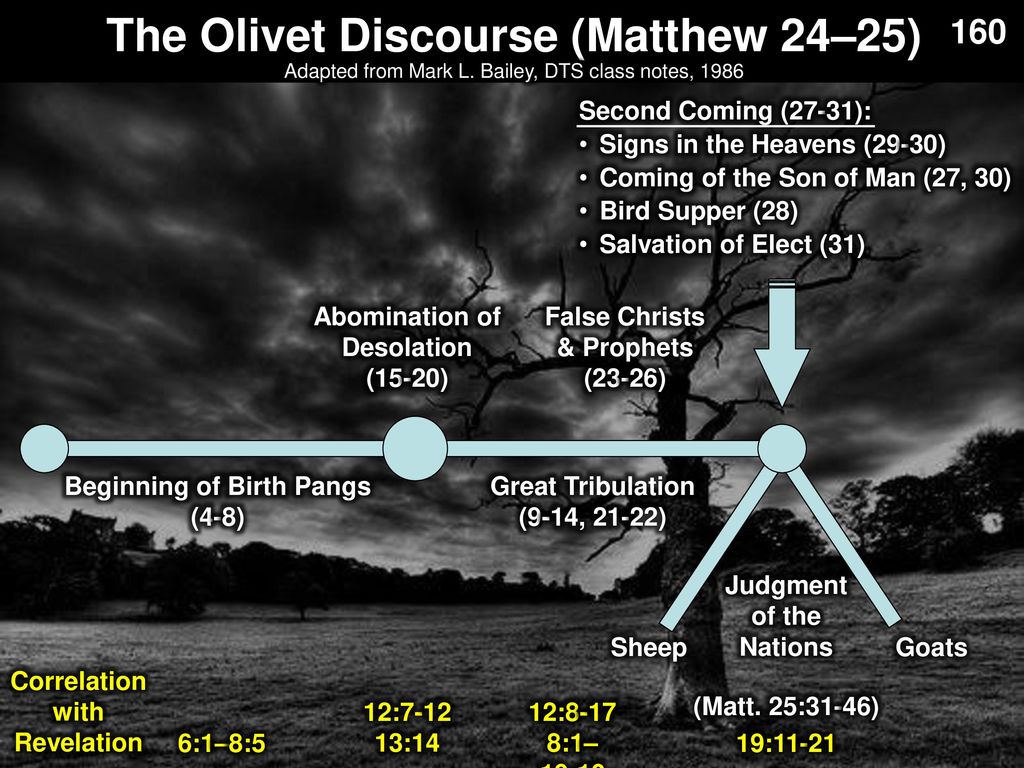
The Olivet Discourse: (Overview Outline)
A) End Times Confusion
(Mathew 24:3)
B) Red-Letter Clarification
(Matthew 24:4-25:46)
Jul 17, 2018
The Instagrammable Christian Life
"Do you remember when Instagram came out? I do, and I remember in particular the little camera icon. Touching that little icon has always filled me with a vague sense of anticipation. Today, Instagram has more than 700 million users. Having used the service since 2011, I’ve watched friends as their lives have developed. I’m sure you have too. It feels like I’ve seen it all: their trips, their weddings, their kids—their best life moments. These are their “Instagram moments.” They’ve seen my Instagram moments, too. Your friends have probably seen yours.
Yet if we’re honest with ourselves, today for most of us is made up of many ordinary moments—not Instagram moments. Yes, there are some of those, but getting up in the morning is rarely, if ever, a picturesque moment. Neither is eating breakfast, nor taking the kids to school. Neither is answering e-mails from coworkers, nor brushing our teeth. That’s not to speak of the bad moments: the despair, the failures, and the hardships. Those moments are rarely posted.
The effects of Instagram on mental health have been well documented.1 Instagram use is associated with higher levels of anxiety, FOMO (fear of missing out), and loneliness. Of course, you can’t attribute these feelings just to browsing Instagram. It’s likely that we browse Instagram when we’re feeling lonely, and so there’s not necessarily a cause-and-effect relationship. Instagram and services like it, however, have given rise, especially among younger generations, to dissatisfaction with the ordinary. As perfect lives made up of perfect moments constantly enter our minds, we feel like we don’t measure up.2
Why is that? There’s a conflict that occurs between our expectation of what things ought to be like (Instagram) and what they’re really like (real life). Our expectations for life shift and change as we view images of other people’s best moments. We come to believe in a subliminal way that the extraordinary, perfect life in the here and now is ideal and achievable, and the monotony and struggle of ordinary life is drab and worthless. We want our ordinary life to be extraordinary all of the time. But, as we all know, that’s not real life. The very definition of extraordinary requires the existence of the ordinary. Extraordinary things are a deviation from the ordinary. Instagram gives the impression that it’s possible to have the extraordinary without any ordinary at all.
Yet if we’re honest with ourselves, today for most of us is made up of many ordinary moments—not Instagram moments. Yes, there are some of those, but getting up in the morning is rarely, if ever, a picturesque moment. Neither is eating breakfast, nor taking the kids to school. Neither is answering e-mails from coworkers, nor brushing our teeth. That’s not to speak of the bad moments: the despair, the failures, and the hardships. Those moments are rarely posted.
The effects of Instagram on mental health have been well documented.1 Instagram use is associated with higher levels of anxiety, FOMO (fear of missing out), and loneliness. Of course, you can’t attribute these feelings just to browsing Instagram. It’s likely that we browse Instagram when we’re feeling lonely, and so there’s not necessarily a cause-and-effect relationship. Instagram and services like it, however, have given rise, especially among younger generations, to dissatisfaction with the ordinary. As perfect lives made up of perfect moments constantly enter our minds, we feel like we don’t measure up.2
Why is that? There’s a conflict that occurs between our expectation of what things ought to be like (Instagram) and what they’re really like (real life). Our expectations for life shift and change as we view images of other people’s best moments. We come to believe in a subliminal way that the extraordinary, perfect life in the here and now is ideal and achievable, and the monotony and struggle of ordinary life is drab and worthless. We want our ordinary life to be extraordinary all of the time. But, as we all know, that’s not real life. The very definition of extraordinary requires the existence of the ordinary. Extraordinary things are a deviation from the ordinary. Instagram gives the impression that it’s possible to have the extraordinary without any ordinary at all.
Subscribe to:
Posts (Atom)